Match 2026-27 Application Prep Starts NowBook Your Consulting Seat Today

Scholarly Work

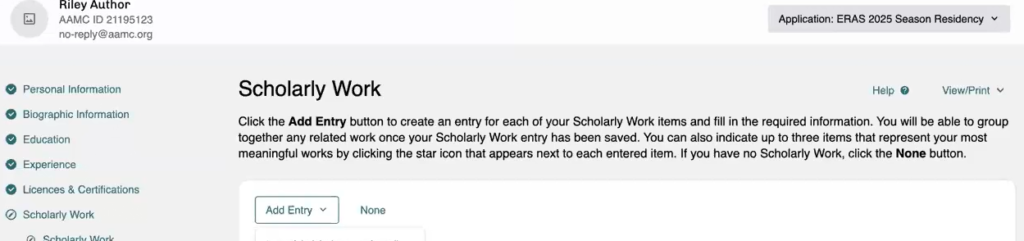
ERAS Publications Now “Scholarly Work” Section: 2026-27 Changes

Among several updates to the 2027 ERAS application, the changes to the Publications section—now called Scholarly Work—are among the most significant. In October, the AAMC hosted a webinar explaining the new Scholarly Work section in detail and the rationale for the new approach. They surveyed students, advisors, and program directors and found a disconnect between what most candidates are being told to put on their applications and what program directors want to see.

It turns out that when it comes to research, the historical “more is better” approach doesn’t necessarily strengthen an application and may, in some cases, weaken it.

Why Is AAMC Changing How Research Is Presented in ERAS?

With the match becoming increasingly competitive, research gradually shifted from a differentiator to an expectation. In recent match cycles, too many applicants have prioritized quantity over quality, often filling their CVs with numerous projects across varied topics and demonstrating limited sustained involvement (i.e. the quicker, the better). In some cases, applicants pay for experiences that promise a publication after several weeks or months of collaborative remote research with peers. 

As a result, publication lists frequently emphasize volume rather and lack focus or meaningful contribution.

This trend made it difficult for programs to evaluate the Publications section. Long lists of loosely related items provide limited insight into an applicant’s interests, depth of involvement, or academic direction. In most cases, smaller numbers of cohesive, substantive contributions are more informative than extensive but fragmented lists.

Supporting this shift, the AAMC reported survey data from 2024 showing that more than 70% of program directors ranked number of publications as either not important or only somewhat important when making interview decisions.

Despite this, applicants (including those not pursuing research-heavy specialties) continue to feel pressure to accumulate additional projects, sometimes at the expense of other meaningful experiences.

It was this understanding that guided the AAMC’s transition to the new Scholarly Works section. Here are the changes, and what they mean for you.

The Publications Section was Renamed “Scholarly Work”

Since the focus of this section has narrowed to academic, peer-reviewed work (explained below), the section title was changed to reflect that.

 Stricter Requirements for Entries

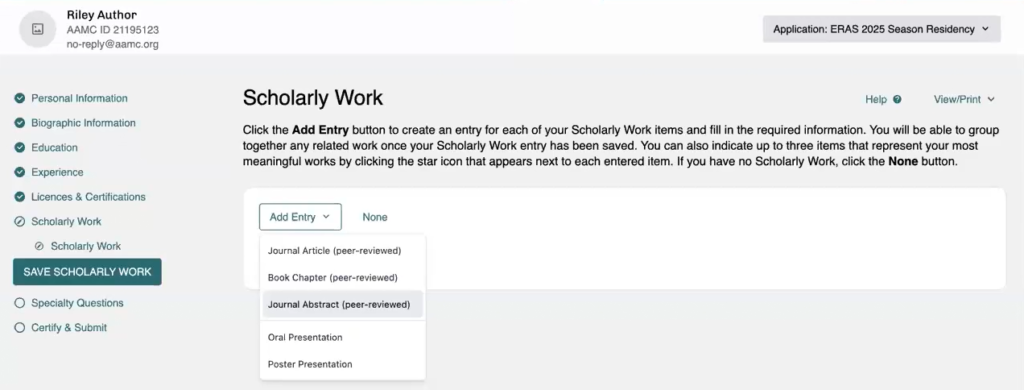
The new Scholarly Work section contains a drop-down box for each entry, and the options are limited to oral presentations, poster presentations, and written work submitted to a peer-reviewed entity (abstracts, articles/manuscripts, and book chapters).

This isn’t to de-emphasize or devalue other kinds of research and writing, but rather to differentiate them from scholarly work. Research and writing that doesn’t meet the scholarly criteria can go in your Experiences section.

Group Oral and Poster Presentations on the Same Topic

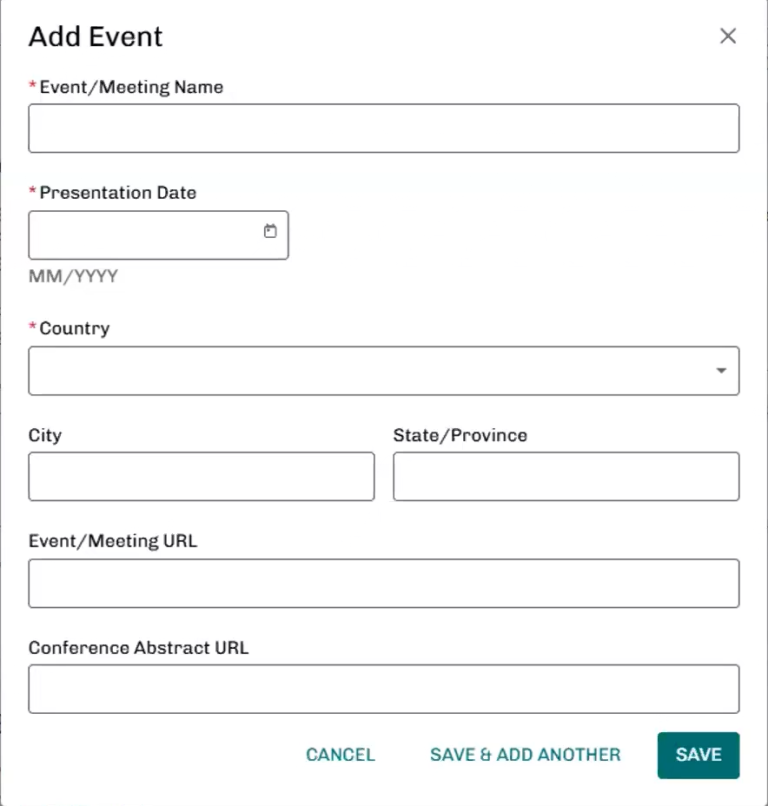
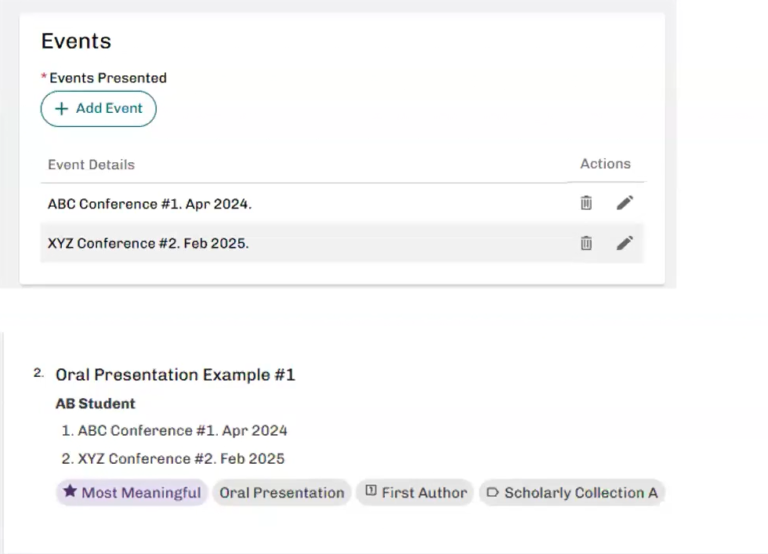
Now, for oral and poster presentations on the same topic, you can add details for each event at which you presented. The only way to do that previously was to add each one as an individual entry, but now each event can be nested under one entry.

This more organized approach reduces duplication and clutter, and gives PDs a clearer picture of the life of your project.

Designate Meaningful Research Entries

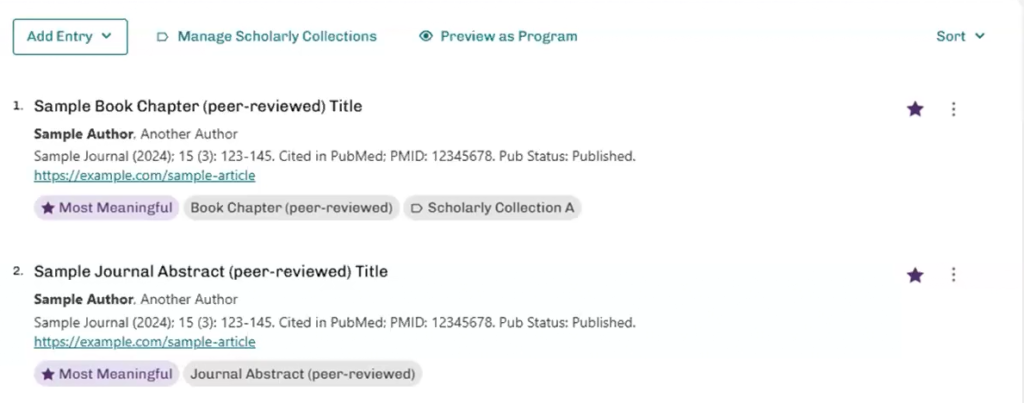
Applicants can now designate up to 3 meaningful entries with a star. This gives you an opportunity to draw attention to projects that speak most to your distinct interests and skills.

Organize Multiple Outputs Into One Collection

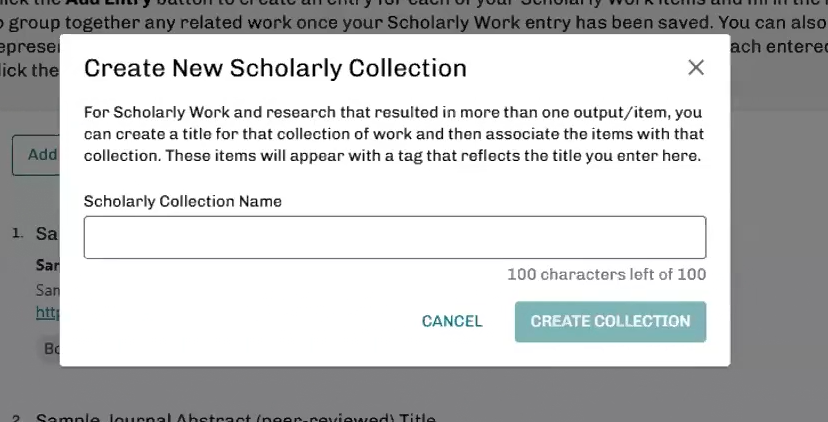
The new Scholarly Collections feature is one of the most exciting changes, and, if used right, can make a huge difference in the strength of your Scholarly Works section. 

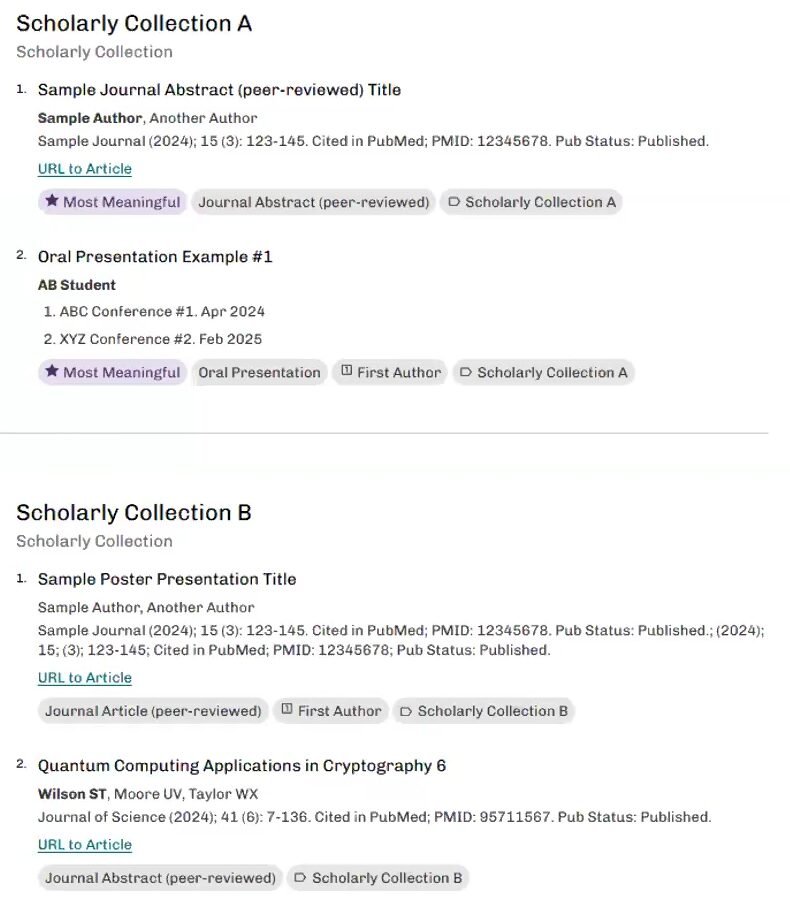
When you create a Scholarly Collection, you can include all outputs for related topics. Take, for example, an applicant with 20 potential Scholarly Work entries across publications and presentations. Of those 20, 1 article and 3 presentations are projects focused on improving health education through community activities. The Collections feature allows these 4 items to be grouped together, demonstrating strong interest in the topic.  This makes it much easier for programs to see which areas have sustained your interest and allows you to showcase the depth of your research experience.

Preview Entries as a Program

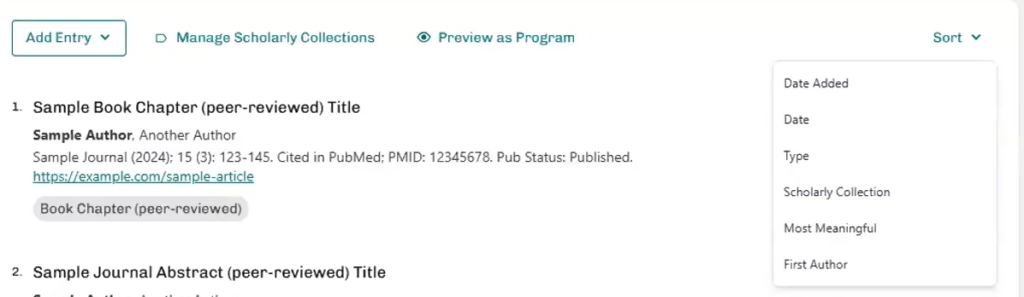
With the “Preview as Program” button, you can see exactly how your Scholarly Work section will look to programs. Programs now have the ability to filter by date, scholarly collection, most meaningful, or first author. Previewing as a program shows you exactly how your entries will look when sorted by different filters. This allows you to test and adjust your organization, for example, ensuring your most relevant projects are starred, grouped into clear collections, and dated appropriately so they surface near the top in common sorting views. By actively toggling these views yourself, you can refine how your work is presented so that, no matter how a PD sorts it, your strongest and most cohesive narrative is immediately visible.

Citation Tags

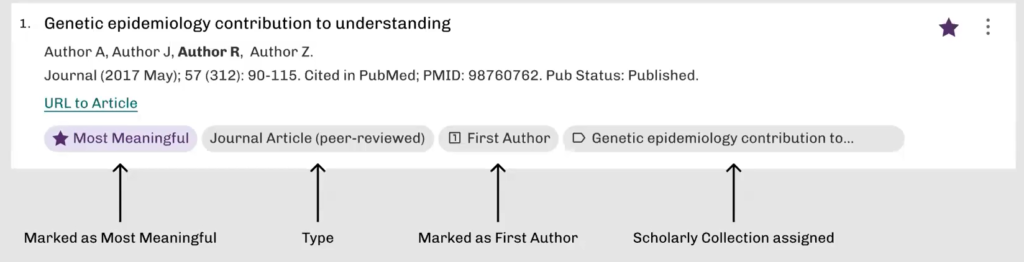
When viewing individual scholarly work entries, associated tags will appear below each entry. Most notably, applicants can now designate first author, making primary authorship explicit.

In addition, the applicant’s name will be bolded within the author list regardless of position, allowing reviewers to quickly identify authorship contributions. Tags will also indicate entries marked most meaningful, the type of output, and the scholarly collection assigned (if any). Together, these visual cues make research contributions easier for program directors to interpret.

Key Takeaways of New Scholarly Work Section

The updates to the Scholarly Work section are meant to reinforce that quality matters more than quantity and to discourage aimless publishing/presenting to stack (or, more accurately, fluff) one’s application.  Here are 4 key takeaways to keep in mind as you plan your ERAS Scholarly Work strategy:

  1. Show depth and continuity in areas you are genuinely interested in. When PDs look at research entries, they’re evaluating what applicants consistently care about. They want to know what topics you’ve gone deep into and how that connects to your future training and career. It’s difficult to demonstrate that with scattered exposure to multiple topics.

  2. Be intentional about what qualifies as “Scholarly Work.” Only include outputs that have been submitted to peer-reviewed entities (manuscripts, abstracts, and book chapters) or were presented at a formal academic event (oral and poster presentations) . Anything else should go in the experiences section under the research category or another appropriate category (advocacy, volunteering, teaching, etc.).

  3. Organize early with “collections” in mind. Track projects in a spreadsheet by topic/theme, not just by output. Plan ahead for how multiple outputs (poster, abstract, paper) can roll up into a single scholarly collection.

  4. Use the “most meaningful” designation strategically. Choose projects that reflect sustained involvement, depth of contribution, and a clear connection to your specialty.

The updated Scholarly Work section was created to better showcase candidates’ research interests, experiences, and abilities. Approaching it intentionally and strategically will help you best take advantage of these changes.

Need help planning your ERAS Application strategy? Learn more about Class Act’s Essential Consulting packages, now available. 

Questions? We are happy to help!

Blog Questions Form